
Help people see.
Give them room to think.
From a sales conversation to a senior illustration classroom, I design ways for people to notice more, test their choices and use what they learn.
Design in the sales conversation.
Field rides with sales representatives led me to create Surprising What the Ads Can Tell You, a class on reading the clues inside an ad and using design in a conversation with a customer.
The goal was practical: help salespeople understand what an advertisement communicates and bring that understanding into their work.
The teaching and the system.
In Dallas, I designed training programs for a larger sales organization and worked on the Sales Training website and learning management system that supported their delivery.
The lesson and the infrastructure had to work together—connecting what people learned with how the organization delivered it.
Read a sales-training colleague’s perspective →Move beyond the empty canvas.
I created the Idea Wheel for my senior illustration students. Six discs combine independent constraints into an unexpected starting point.
Students interpret the combination in their own medium, then explain why they chose that direction. The wheel gets them started while leaving the result—and the judgment—to them.
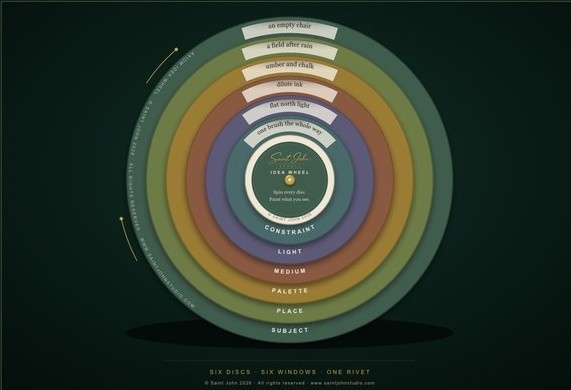
The prompt starts the work.
The learner makes meaning.
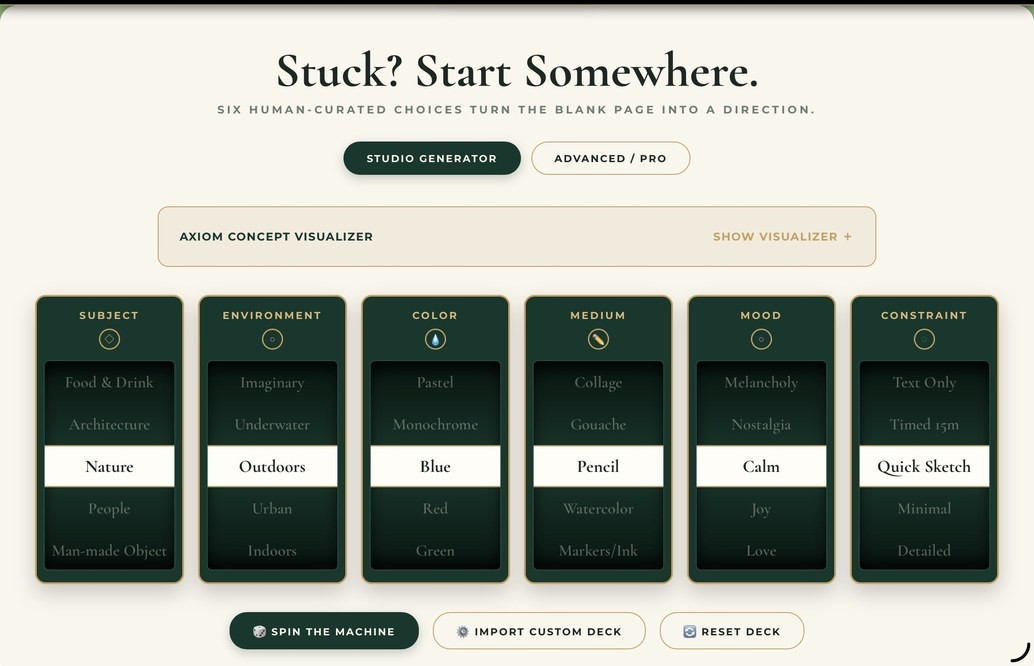
I developed the digital Idea Machine around six choices: subject, environment, color, medium, mood and constraint. Instructors can change the decks; students interpret each new combination.
A prompt can become a drawing or a story without AI. When a visualizer is used, its image becomes material for critique: compare interpretations, explain the differences and decide what to revise.
A useful learning tool creates room for independent judgment.
Look closely.
Make with intention.
Learning to See brings the practice together: notice patterns and relationships, then let those observations shape what you make.
In sales training, that means reading an ad with greater understanding. In the classroom, it means interpreting a prompt and defending a choice. In creative direction, it means choosing the form and medium that serve the idea.

The medium shapes the lesson.
From print and illustration to interactive tools, the evolution of visual communication changes how an idea reaches people. Learning to see helps us choose those tools with care.
For ArtCenter’s evening education program, I gave visual form to Emerson’s line: “When it is dark enough, you can see the stars.” The image gives an educational idea a form people can remember.
Explore visual communication and illustration →
Keep the decisions in view.
AXIOM is in development to connect prompts, decisions and approved work while preserving creative context. It extends the same concern behind the teaching: help people understand how an idea develops, so they can build on it.
Explore the AXIOM direction →What I bring to the work.
Teaching experience, sales-training practice and creative leadership inform the way I design learning experiences—from the first prompt to the system that carries it.
Discuss a learning project →